
Shop / History
What Is Lawful Rebellion?
"Lawful rebellion" sounds like a contradiction. The phrase comes from one clause of Magna Carta, sealed in 1215, and it means something much narrower than most people think. Here is where it comes from, how it is used today, and what it means to us.
Source: clause 61 of Magna Carta, sealed by King John at Runnymede on 15 June 1215
Who held the power: a council of twenty-five barons, not the public at large
How long it lasted: the charter was annulled by Pope Innocent III in August 1215, and clause 61 was left out of the 1216 reissue
Legal force today: none
Where the phrase comes from
By 1215 England's leading barons had lost patience with King John. The charter they made him accept at Runnymede listed dozens of promises, and it ended with a way to enforce them. Under what we now call clause 61, the barons would choose twenty-five of their number to watch over the charter. If the king or his officials broke its terms and failed to put things right within forty days, the twenty-five could seize the king's castles, lands and possessions until he did. The king, the queen and their children were not to be harmed, and once the wrong was corrected the barons were to return to normal obedience.
That is the "lawful" part. The pressure was written into a charter that the king himself had sealed. The clause also said that any man who wished could take an oath to obey the twenty-five in this. Our Knowledge is Power Chapter 61 T-Shirt carries "Magna Carta 1215" and "Chapter 61" around the royal arms on the back. For the full text and story, read our guide to Magna Carta clause 61.
Why it didn't last
Clause 61 was never workable. John appealed to the Pope, who declared the charter null and void that August, and England fell into civil war. After John died in 1216, the government of his young son Henry III reissued Magna Carta without the security clause, and it never came back in the reissues of 1217 and 1225 or in the 1297 version that entered the statute book. The rest of the charter had a much longer life, which is the story behind our We Are Waking T-Shirt.
How the phrase is used today
Online, "lawful rebellion" is sometimes presented as a living right. Posts claim that citing clause 61 lets a person refuse to pay a tax or bill, ignore a court, or "legally overthrow" a government. These claims are false. The fact-checking charity Full Fact has looked at several of them and found that clause 61 has no legal standing today: it appeared only in the 1215 charter, was never placed on the statute book, and in any case gave its powers to twenty-five barons, not to the population in general. It is not a defence in any court in the UK, Australia or anywhere else.
What lawful rebellion means to us
Lawful Rebellion Co. takes its name from clause 61 because of the idea behind it, not because we think it is a legal loophole. The idea is that rulers are bound by the law too, and that ordinary people have a part to play in holding power to account. Today that happens through lawful means: knowing your rights, asking questions, voting, petitioning, using the courts, writing to your representatives and taking part in peaceful protest.
Some of the charter's promises did survive. Clause 39 said no free man would be imprisoned or stripped of his rights "except by the lawful judgement of his equals or by the law of the land", which inspired our Freeman T-Shirt. The A Right and a Duty T-Shirt carries the idea that holding power to account is a shared responsibility. We keep every design about history and principle, and free of party politics.
Read first, then wear it
The best way to understand lawful rebellion is to read what Magna Carta actually says. If you like your history on a shirt, see our guide to Magna Carta t-shirts or browse the full range. (This page is history, not legal advice.)
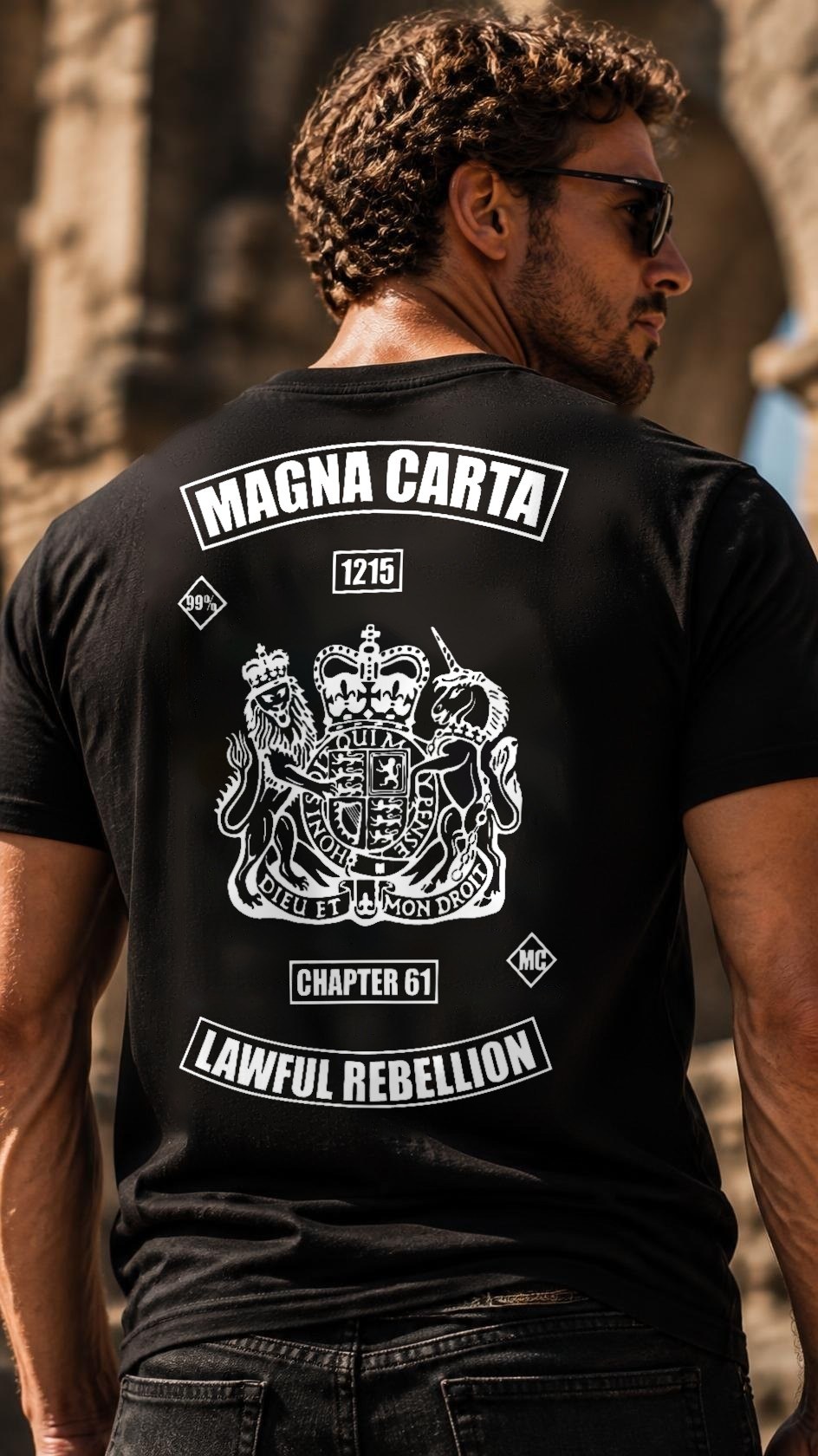 Knowledge is Power Chapter 61 T-Shirt
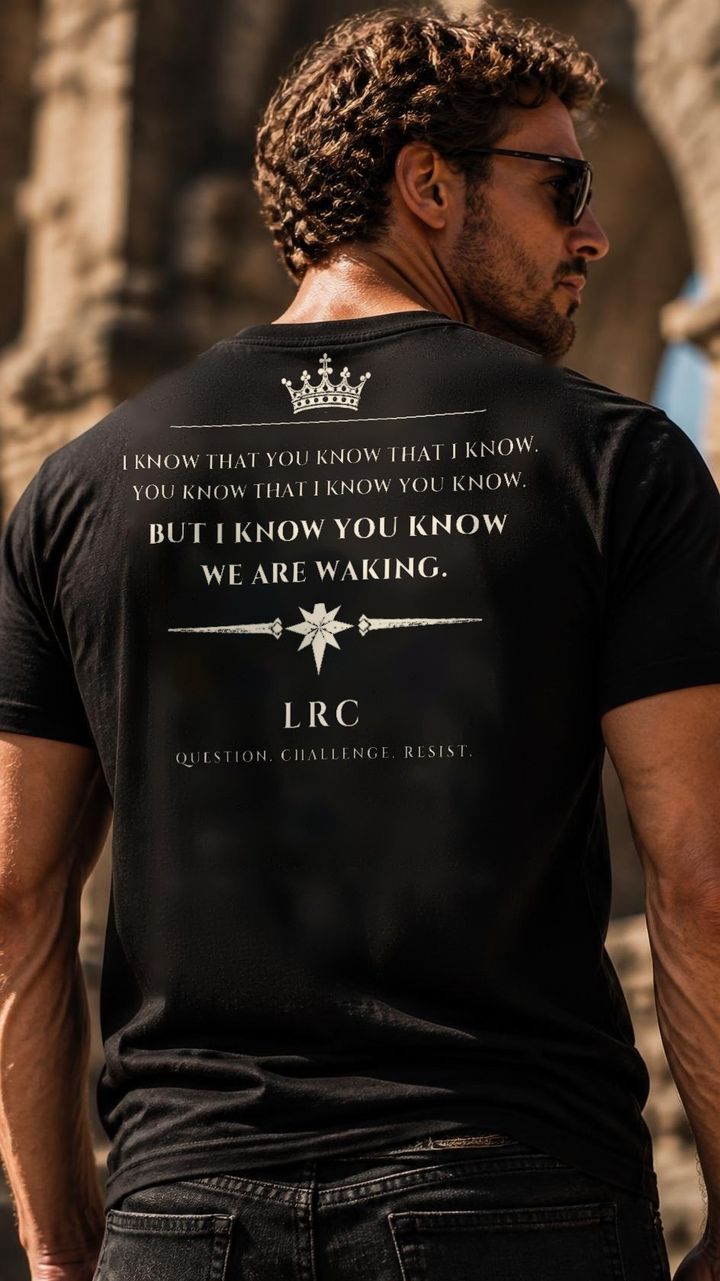 We Are Waking T-Shirt
 Freeman T-Shirt
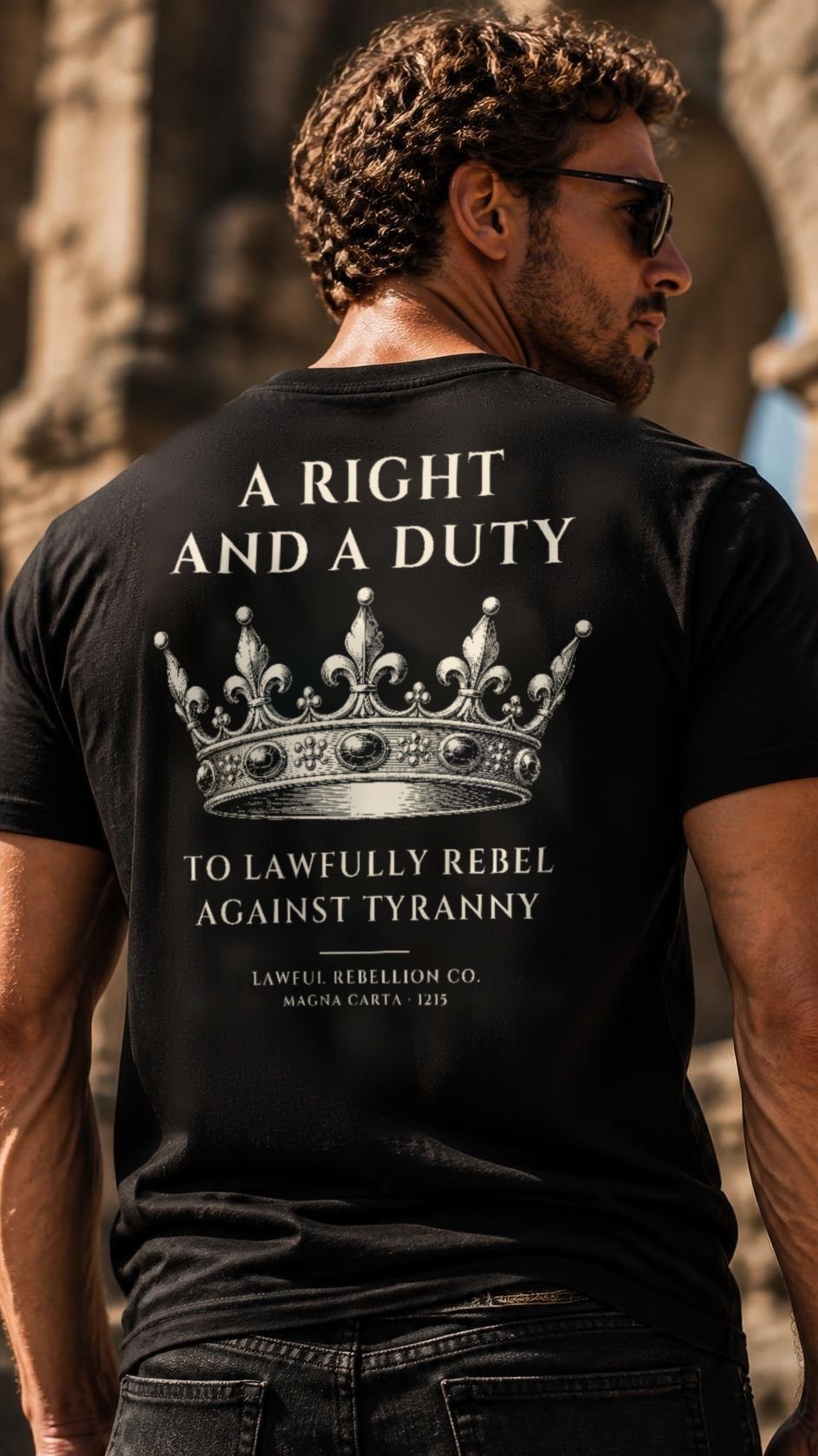 A Right and a Duty T-Shirt